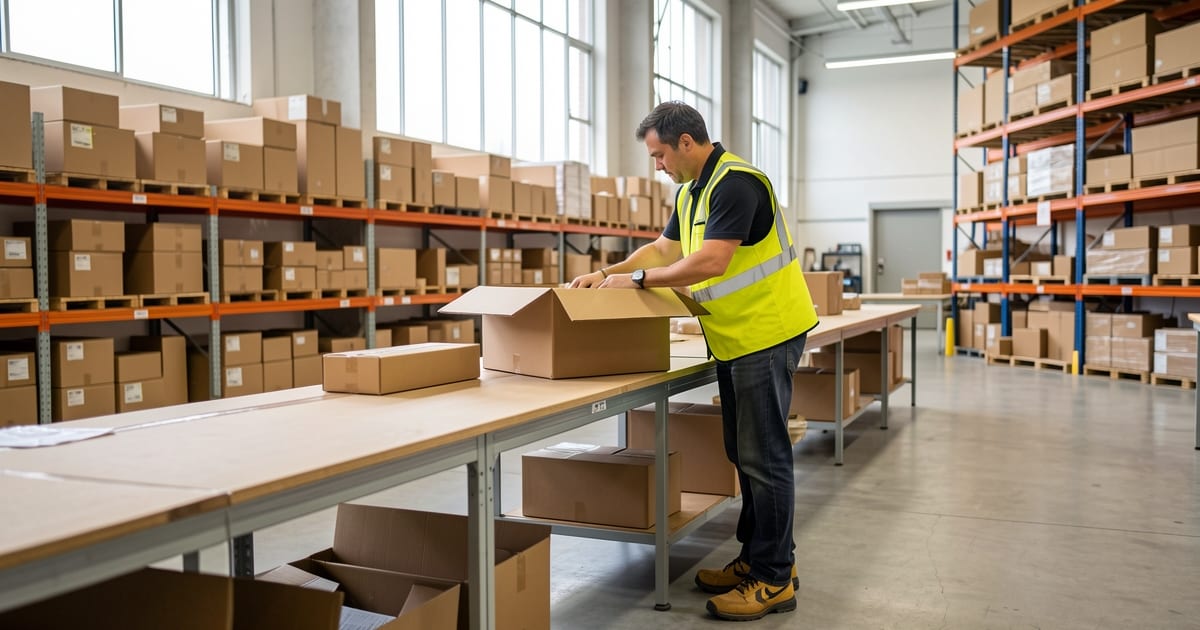
Pick-pack work is one of the most common ways to get into the warehouse and logistics industry in Australia. You don't usually need experience, the training is mostly on the job, and there are roles in most major cities and many regional areas.
The big question for a first-timer is often not whether to apply, but what type of job to go for. Casual or permanent? Each has real advantages, and the right choice depends on your situation.
This guide explains the difference in plain terms, so you can apply with confidence.
What pick-pack work involves
In a pick-pack role, you collect items from shelves or bins to fill customer orders (the picking), then check, wrap and box them ready for dispatch (the packing). Many warehouses supply orders for online stores, wholesalers, grocery suppliers or other businesses.
A typical shift might include:
- Following a pick list on a handheld scanner or printed sheet
- Walking or using a trolley or pallet jack to collect items
- Checking quantities and spotting damaged goods
- Packing orders carefully and applying labels
- Keeping your area tidy and following safety procedures
The work is physical. You are on your feet for most of the day, and you may need to lift boxes repeatedly. Accuracy and pace both matter, because employers track how many orders are filled correctly.
What casual work means
Casual employment is flexible. You are usually offered shifts as they come up rather than a fixed weekly pattern, and you can often say no to a shift without a problem, though this varies by employer. Many warehouses use casuals to cover busy periods, such as the lead-up to Christmas or big sale events.
Casual employees are generally paid a higher hourly rate to make up for not receiving things like paid annual leave or paid sick leave. The exact rules depend on your award or agreement, so check the Fair Work Ombudsman website for what applies to your job.
Pros of casual pick-pack work
- Easy to get started. Employers often hire casuals quickly, sometimes through a labour-hire or recruitment agency.
- Higher hourly pay. The hourly rate is typically higher than for equivalent permanent staff.
- Flexibility. It can work around study, caring responsibilities or another job.
- A way to try the industry. You can find out if you like the pace, the hours and the workplace.
Cons of casual pick-pack work
- Unpredictable hours. Some weeks may be full, others quiet.
- Less security. If orders drop, your shifts can drop too.
- No paid leave. If you are sick or take a holiday, you generally don't get paid for that time.
- Harder to plan. Irregular income can make it difficult to budget or apply for a rental.
What permanent work means
Permanent work, often called ongoing employment, means you have a continuing job with regular hours. It may be full-time or part-time. You typically get paid leave entitlements, and your hours are more predictable.
Warehouse employers sometimes hire permanent staff directly and sometimes offer a probation period first. If you are offered a probation period, ask how long it is and what happens at the end of it.
Pros of permanent pick-pack work
- Steady income. Regular hours make budgeting easier.
- Paid leave. You are generally paid when you take annual leave or are sick, subject to the rules that apply to your job.
- Stronger training and progression. Employers are more likely to invest in staff they plan to keep, for example by training them on other tasks.
- Easier to plan your life. A stable roster helps with transport, childcare and study.
Cons of permanent pick-pack work
- Fewer positions. Permanent roles can be harder to land without any experience.
- Less flexibility. You are expected to work your roster, and changing shifts may need approval.
- Lower hourly rate. The hourly figure is often lower than the casual rate, although the leave entitlements make up some of the difference.
- Notice requirements. Resigning usually means giving notice. Check your contract and the Fair Work Ombudsman website for what applies to you.
How pay compares
Pay varies by location, employer, experience, shift times and the award or agreement that covers the job. As a rough guide only, entry-level pick-pack roles often pay somewhere around $25 to $35 an hour for casual staff, and permanent roles can work out at around $55,000 to $70,000 a year for full-time hours. Night shifts, weekends and overtime can lift your earnings.
Don't compare only the hourly rate. A casual rate that looks higher may be less valuable if you only get a few shifts a week. Think about your likely weekly hours and how reliable they are.
For official pay information, use the Fair Work Ombudsman website or ask your employer which award or agreement covers the role.
Which one suits you?
Casual may suit you if:
- You are studying or have another commitment that changes week to week
- You want to test warehouse work before committing
- You need a job quickly
- You are happy with some uncertainty in your hours
Permanent may suit you if:
- You need a steady income for rent, a car loan or family costs
- You want paid leave
- You are looking for a long-term path in logistics
- You prefer a regular routine
It doesn't have to be a lifelong decision. Many people start casual and move into ongoing roles once the employer knows their work.
Moving from casual to permanent
If you take a casual job and want something more stable, there are practical things you can do:
- Be reliable. Turn up on time, accept shifts when you can and let your supervisor know early if you cannot.
- Keep your accuracy high. Fewer picking errors make you easier to keep on.
- Learn more than one task. Ask to be shown packing, returns, goods receiving or scanning stock.
- Follow safety rules. Employers notice people who lift correctly and keep walkways clear.
- Ask directly. Tell your supervisor you are interested in an ongoing role and ask what would help you be considered.
Asking is not pushy. It simply tells the employer you want to stay.
Applying without experience
Most pick-pack employers care more about attitude, reliability and safe work habits than a long job history. Your resume can still help.
- Keep it to one or two pages.
- Start with a short summary that says you are looking for a pick-pack or warehouse role and are reliable and physically fit for the work.
- List any work that shows similar skills, such as retail, hospitality, cleaning, farm work or volunteering.
- Mention things like working to targets, handling stock, following instructions, teamwork and keeping to a roster.
- Include your availability, including whether you can work early starts, nights or weekends.
- Add referees, such as a former supervisor, teacher or coach, and ask them first.
Some roles may ask for a licence, such as a forklift licence, or other checks. Read each advertisement carefully and check the official requirements for your state or territory if something is unclear. Don't claim a ticket or licence you don't hold.
Questions to ask before you accept
Whether the job is casual or permanent, ask:
- How many hours a week do people in this role usually get?
- What are the shift times and how far ahead is the roster set?
- Is there a probation period?
- What training will I get?
- Are there set picking targets and how are they measured?
- Which award or agreement covers the job?
- Is there a chance of moving to ongoing work?
Write down the answers, and make sure you receive the terms in writing.
Preparing for the interview
Interviews for pick-pack roles are often short and practical. Expect questions such as:
- Why do you want to work in a warehouse?
- How do you handle repetitive work?
- Can you work to targets and still stay accurate?
- What would you do if you saw a safety hazard?
- What availability do you have?
Be honest and give small, real examples. If you have never worked in a warehouse, talk about times you were on your feet all day, worked in a team or double-checked your work. Wear clean, practical clothes and enclosed shoes, as the employer may also show you around the site.
A simple way to decide
If you need work now and want flexibility, a casual role is a sensible first step. If you need stability and can find an ongoing position, take it. If you are unsure, start casual, do the job well and keep your options open.
Either way, your first warehouse job builds skills such as accuracy, speed, safety awareness and teamwork. These carry across to other roles in logistics, from inventory control to team leading.
Today, update your resume, write down your weekly availability and apply to a few roles that match your needs. Then use the questions above to find out exactly what you're being offered.