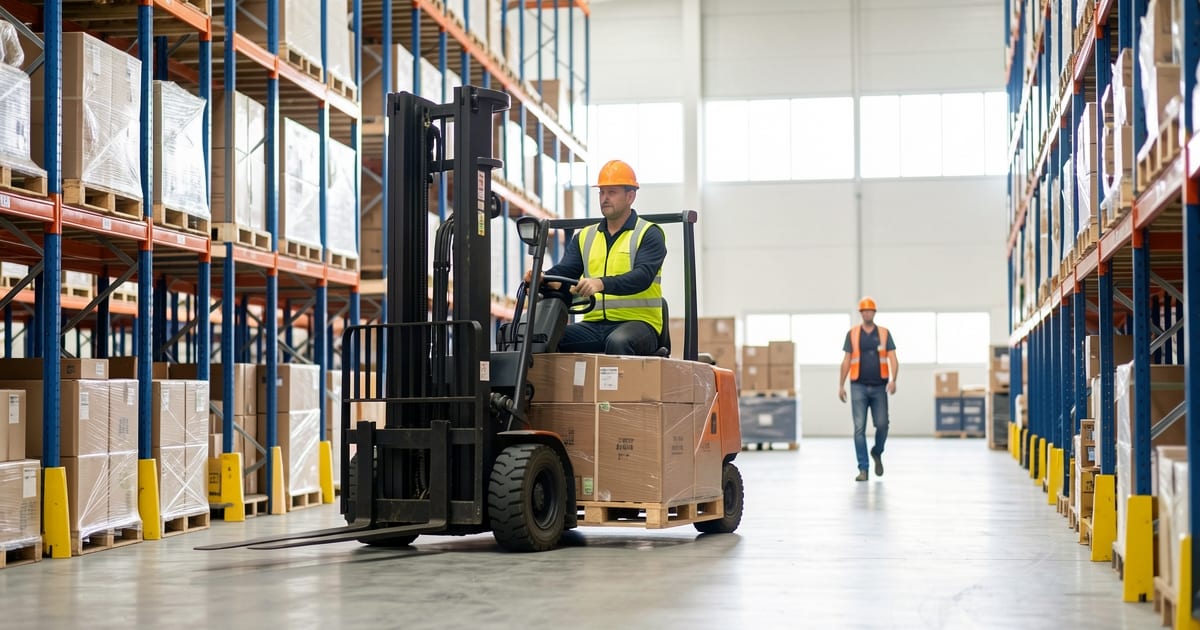
Warehouse work is one of the more accessible ways into steady, full-time employment in Canada. Many roles do not ask for a degree or years of experience, and employers often care most about reliability, safety habits and a willingness to learn.
This guide explains the common entry routes, where forklift training fits, what shifts tend to look like, and how to present yourself so a hiring manager can picture you on the floor.
What warehouse work involves
A warehouse or distribution centre moves goods in, stores them, and sends them out again. Most of the work is physical and routine, and it runs on accuracy and teamwork.
Common entry-level job titles include:
- Warehouse associate or general labourer
- Order picker or selector, who collects items for customer orders
- Packer, who prepares items for shipping
- Loader and unloader, who handle trucks and containers
- Shipping and receiving clerk, who check paperwork and deliveries
- Material handler, who moves stock around the building
Forklift operator, reach truck operator and inventory control roles usually come next. Many people start as a general associate and move into these positions after showing they are dependable.
Entry routes that work
There is no single path in. These are the most common ones, and you can use several at once.
Staffing agencies
Many warehouses hire through temporary staffing agencies, especially for busy periods. Agencies often fill roles quickly and may place you with an employer within days of an interview. Temporary placements can turn into permanent roles if you do well, though that is never certain.
Ask the agency about the typical length of assignments, the usual shift pattern, and how pay and breaks are handled so there are no surprises.
Applying directly
Larger distribution centres and logistics companies often post openings on their own career pages. Smaller operations may rely on job boards or word of mouth. The Government of Canada's Job Bank is a free place to search for openings and read general information about occupations.
Seasonal and part-time work
Busy retail periods increase demand for extra hands. Seasonal work can be a useful way to get Canadian experience and a reference, even if the contract is short. Treat it like a trial: be on time, ask questions and show you can keep up.
Referrals and local networks
Friends, classmates, neighbours and community groups sometimes know of openings before they are advertised. Tell people you are looking for warehouse work and what shifts you can do. A short, specific message is easier for someone to pass on.
Where forklift training fits
Forklift skills can make you more attractive to employers, but you do not always need them to get your first warehouse job. Many entry-level roles involve no powered equipment at all.
What counts as proper training, who must provide it, and how long it stays valid can differ by province and territory and by employer. Before you pay for anything, check with your provincial or territorial workplace health and safety agency, and ask any employer you are applying to what they expect.
In general, you will come across a few routes:
- Employer-provided training. Some employers train new hires on their own equipment. If a posting says training is provided, that can be a good way to start without paying out of pocket.
- Training providers. Private schools, colleges and industry training centres offer forklift courses. Fees and course length vary, so compare a few providers and ask exactly what is covered.
- Hands-on evaluation. Good training usually combines classroom learning about safety with practical time on the machine, followed by an assessment.
A certificate from an outside course can help your resume, but many employers also want to watch you operate their specific equipment before letting you work independently. Think of outside training as a head start rather than a guarantee.
When researching a course, ask these questions:
- Does the course include practical, hands-on time and not only theory?
- What type of equipment will I be trained on?
- What documents will I receive when I finish?
- Do employers in my area recognize this provider?
- What is the full cost, including any assessment or card fees?
Understanding shifts
Warehouses often run well beyond a standard nine-to-five, and shift patterns are one of the biggest differences between employers.
You might see:
- Day shifts, often starting early in the morning
- Afternoon or evening shifts
- Overnight shifts, which some employers pay a premium for
- Weekend shifts, either regular or rotating
- Longer shifts on compressed schedules, such as fewer, longer days
- Overtime, especially during peak periods
Check what is on offer before accepting. Ask whether the schedule is fixed or rotating, how much notice you get of changes, and how overtime works. Think about transit too. If a shift starts or ends when buses and trains are limited, you will need a reliable way to get there, particularly in winter.
Some warehouses are cold or frozen environments, and others are hot in summer. Ask about the working conditions, and plan for appropriate clothing and footwear.
What the pay can look like
Pay varies by province, city, employer, shift and experience, so treat any figure as a rough guide. Entry-level warehouse associates typically earn somewhere around $17 to $23 per hour, while forklift and other equipment operators often earn around $19 to $28 per hour. Overnight shifts, specialized equipment or union workplaces can change the picture.
Look at the whole offer, not just the hourly rate. Ask about:
- Guaranteed hours and how often they change
- Shift premiums and overtime rates
- Benefits and when you become eligible for them
- Whether the job is permanent, contract or temporary
- Paid training time
For official information about minimum wage, breaks, overtime and notice, use your provincial or territorial government website rather than relying on a job ad or a recruiter's summary.
Build a resume that fits the role
Warehouse employers usually scan resumes quickly. Keep yours to one page, in a clean format, and put the most relevant details near the top.
Include:
- Your name, phone number, email and city
- A short summary stating the type of role you want and your availability
- Any forklift or equipment training, with the provider and year
- Safety-related training you have completed
- Work history with brief bullet points
If you have no warehouse experience, look for transferable skills. Retail stock work, food service, farm work, volunteering and school projects can all show physical stamina, speed, teamwork and attention to detail.
Compare these two bullet points:
- Weak: Worked in a store.
- Stronger: Unloaded weekly deliveries, checked items against packing lists and kept the stockroom organized during busy periods.
Be honest about what you can do. A confident, accurate resume holds up better in an interview and on the job.
Prepare for the interview
Warehouse interviews are often short and practical, sometimes done in a group or on the floor. Employers want to know that you will show up, work safely and get along with others.
Expect questions like these:
- Can you work the shifts we need, including nights or weekends?
- Are you comfortable lifting and being on your feet for a full shift?
- Tell me about a time you worked as part of a team.
- How do you make sure you are accurate when you are working fast?
- What would you do if you saw a safety hazard?
For the safety question, a simple answer is to stop, avoid the hazard, and report it to a supervisor right away. Employers like to hear that you take safety seriously.
Ask a few questions of your own, such as what a typical shift looks like, how training works for new hires, and how performance is measured. Questions like these show real interest and help you decide if the job suits you.
Look after your safety and fitness
Warehouse work can be demanding on the body. Wear sturdy, comfortable footwear, learn safe lifting habits, and take your breaks. If you are asked to operate equipment you are not trained on, say so. Speaking up is a sign of good judgment, not weakness.
Steps you can take today
- Decide which shifts and commute distances you can realistically manage.
- Update your resume with transferable skills and any relevant training.
- Search the Job Bank and local job boards for warehouse associate, order picker and shipping and receiving roles.
- Contact one or two staffing agencies and ask how their placements work.
- Look up your provincial or territorial workplace safety agency for forklift training information.
- Practise answering common interview questions out loud.
Warehouse work rewards consistency. Start with the roles that match your current skills, build a record of reliable work, and add forklift or other equipment training as you go. Each step makes your next application stronger.