Multi-drop delivery work can look appealing on paper. A day rate advertised at a few hundred pounds sounds strong, especially if you are comparing it with an hourly wage. But the number on the advert is not what lands in your bank account.
This guide explains how day rates and per-parcel pay typically work in the UK, which costs self-employed drivers carry, and how to work out what a route is really worth to you. Pay varies by location, employer, and experience, so treat every figure here as a rough guide rather than a promise.
What a multi-drop driver does
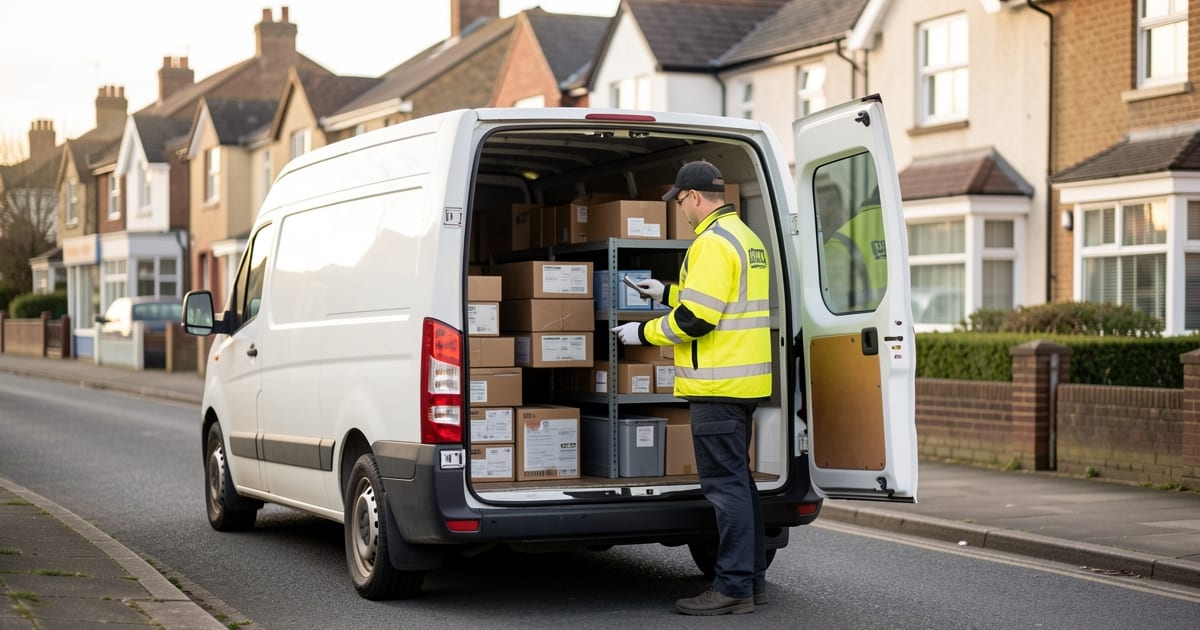
A multi-drop driver loads a van at a depot or hub, then makes many stops in one shift, delivering parcels or other goods to homes and businesses. The role is sometimes called a courier, a parcel driver, or a last-mile driver.
The work is physical, time-pressured and often long. Many drivers start early, load their own vans, and finish after the last delivery rather than at a fixed time.
Employed or self-employed: the first question
Before you compare pay, find out how you would be engaged. In the UK, some drivers are employees or workers, and many are self-employed and contract with a courier company or a delivery network.
This matters because it changes who pays for what. As an employee you usually receive a wage, and the employer normally provides the van and covers its running costs. As a self-employed driver you are paid for the work you do and you carry the business costs yourself.
Your employment status depends on the real working arrangement, not just the label in a contract. If you are unsure about your status, or about holiday pay, sick pay, tax and National Insurance, check the official GOV.UK guidance or speak to an independent advice service before you sign.
How day rates work
A day rate is a fixed payment for a day's work on a route, regardless of how many parcels you deliver. You might see rates advertised at around £120 to £200 a day for a driver working in someone else's van, and higher figures, often in the region of £180 to £250 or more, where you bring your own van. These are typical ballparks only and vary widely by area, contract and demand.
Things to check about a day rate:
- What is included. Does the rate cover fuel, or is fuel on top?
- Whose van it is. A higher rate usually means you supply the vehicle.
- How long the day is. A day rate for an eight-hour route is very different from one that regularly runs to eleven hours.
- What happens if the route is cut short or cancelled. Some arrangements pay nothing if work is not available.
- How many days a week are offered. Steady work is worth more than a high rate with gaps.
How per-parcel pay works
With per-parcel (or per-drop) pay, you earn a set amount for each item or stop completed. Rates vary a lot depending on parcel size, how rural the area is, and how dense the stops are. The amount per parcel is often well under £2, and sometimes much less, so the total depends heavily on volume.
Per-parcel pay rewards efficiency but shifts risk onto you. A route packed with close-together addresses can pay well. A spread-out rural route with failed deliveries can pay poorly for the same effort.
Ask about:
- Whether you are paid for failed deliveries and returns
- Whether you are paid for collections as well as deliveries
- Whether there is a minimum guaranteed amount per day
- How the number of parcels per route is decided, and whether it can change
- Whether any deductions apply for damaged or lost items
The costs self-employed drivers carry
If you bring your own van, your gross earnings are only the start. Here are the main costs to account for.
Fuel
Fuel is usually the biggest running cost. Multi-drop routes involve lots of stopping and starting, which uses more fuel than steady motorway driving. Prices change, so use your own recent fill-up costs rather than assumptions.
Van purchase, lease or hire
You might buy a van, finance it, lease it, or hire it from the courier company or a rental firm. Weekly hire and lease charges can be significant, so compare the weekly cost with the day rate before you accept.
Insurance
You typically need appropriate van insurance that covers carrying goods for hire and reward. Cover for this kind of work is usually more expensive than ordinary van insurance. Confirm with an insurer exactly what you need and do not assume your existing policy is enough.
Maintenance, tyres and repairs
A van doing high mileage wears quickly. Set aside money each week for servicing, tyres, brakes, and unexpected repairs. Time off the road for a breakdown also means lost earnings.
Other costs
- Handheld scanner or app fees, if charged
- Parking and congestion or clean air zone charges, where they apply
- Uniform or equipment such as a hi-vis jacket, gloves, and a trolley
- Goods in transit insurance or public liability cover, if the contract requires it
- Accountancy fees or bookkeeping software
- Tax and National Insurance, which are your responsibility when self-employed
For rules on what you can claim, registering as self-employed, and what you owe, use the official GOV.UK guidance rather than relying on forum posts.
A simple way to work out your real pay
Use a worked example with made-up round numbers to see how it works. These figures are illustrations, not typical rates for any specific employer.
Suppose a route pays around £200 a day and you work about five days a week, so roughly £1,000 a week before costs. Now subtract your own weekly figures:
- Fuel for the week
- Van lease, finance or hire
- Insurance, spread across the week
- A maintenance and repairs fund
- Other costs such as equipment and fees
- A set-aside for tax and National Insurance
What remains is your real take-home. Then divide it by the total hours you actually work, including loading, waiting at the depot, and finishing late. That gives you an honest hourly figure to compare with an employed role.
It is quite possible for a headline rate that looks high to work out close to, or even below, a standard hourly wage once costs and long days are counted. It is also possible for a well-run route to work out well. The only way to know is to do the sum for the specific offer.
Questions to ask before you accept a route
When you speak to a courier company or network, ask plainly. A reputable operator should be happy to answer.
- Am I engaged as an employee, a worker, or self-employed?
- Is the rate a day rate or per parcel, and how is it calculated?
- What deductions, charges or fines might be taken from my pay?
- How often and how quickly am I paid?
- Who provides the van, fuel card, and scanner?
- What is the typical number of stops and finishing time?
- What happens if I am ill or cannot work for a few days?
- Can I send someone in my place if I cannot work?
Get the answers in writing where you can, and read any contract fully before signing.
Ways to improve what you take home
Once you are working, small habits make a difference:
- Track every cost. Keep receipts and a simple weekly spreadsheet.
- Compare fuel options. Small savings per fill-up add up over a year.
- Learn your area. Knowing the estates, access points and delivery quirks saves time.
- Plan your loading. Loading in stop order reduces searching at each drop.
- Look for steadier work. Regular routes with reliable volume can be worth more than occasional higher-paying days.
- Build a reputation. Reliable drivers are often offered better routes.
Is multi-drop driving right for you?
It can suit people who like working independently, are happy to be on the move all day, and are comfortable managing their own finances. It is less suitable if you need predictable hours, guaranteed pay, or a low level of physical effort.
If you are new to the work, consider starting with an employed driving role or a short trial period to learn the pace before committing to a van lease or purchase. And if you are experienced, use the real-pay calculation above to compare offers on equal terms.
The key point is simple: judge any route by what you keep after costs and for the hours you actually work, not by the headline day rate.