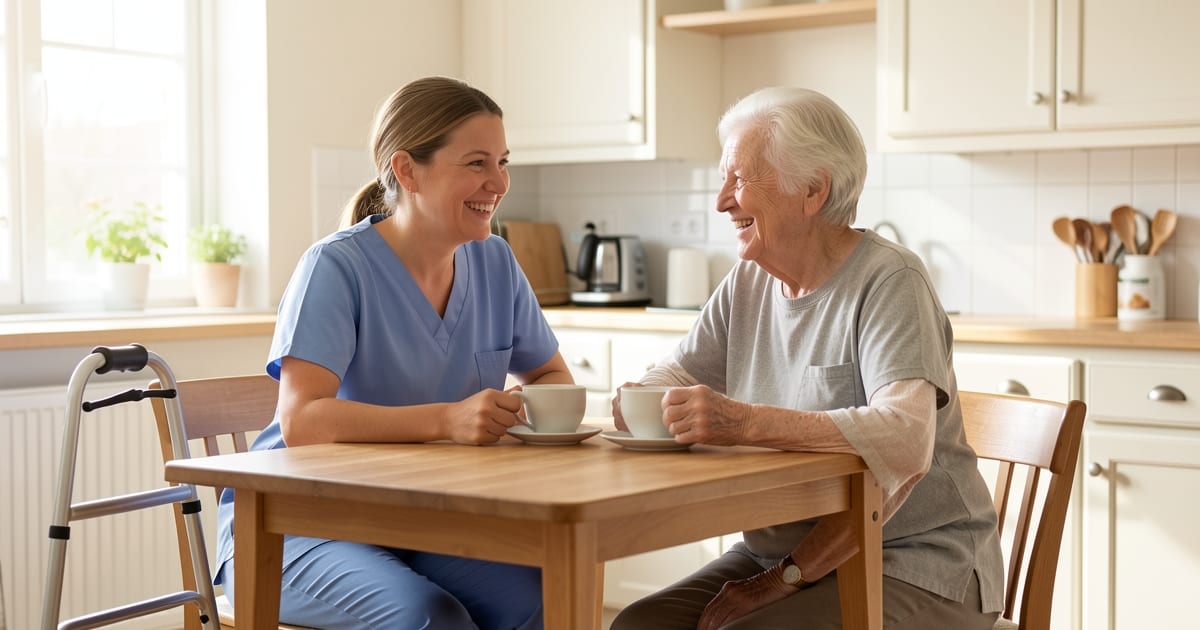
Home health aides and caregivers help older adults, people with disabilities, and people recovering from illness manage daily life. Many do it in their own homes rather than in a hospital. It is a field where people with little formal experience can start, and where reliability and compassion count for a lot.
This guide explains what the work looks like, which training and credentials employers often ask for, and what you can do this week to get started.
What the daily work involves
No two days are exactly alike, because every client has different needs. Most shifts mix hands-on personal care with practical help around the home.
Common tasks include:
- Personal care: helping with bathing, dressing, grooming, and using the toilet, always with respect for the client's privacy and dignity.
- Mobility support: helping someone stand, walk, transfer from bed to chair, or use a walker or wheelchair safely.
- Meals and nutrition: planning and preparing meals, following dietary instructions, and helping with eating when needed.
- Medication reminders: prompting clients to take medicines as directed. What an aide is allowed to do with medications differs by state and employer, so always ask.
- Light housekeeping: laundry, tidying, changing bed linens, and keeping the living space safe and clean.
- Errands and transportation: grocery runs, pharmacy pickups, and rides to appointments, if the job includes them.
- Companionship: conversation, games, walks, and emotional support. For clients who are isolated, this can matter as much as any physical task.
- Observing and reporting: noticing changes in mood, appetite, mobility, or skin, and passing them on to a supervisor, nurse, or family member.
You may work in a client's private home, an apartment, or an assisted living community. Some people work through an agency that sends them to different clients. Others are hired directly by a family.
Job titles you will see
Titles overlap, and employers use them differently. Searching only one title can make you miss good openings.
- Home health aide (HHA): often assists clients who need some health-related support at home, usually under the direction of a nurse or care team.
- Personal care aide (PCA) or caregiver: often focuses on daily living tasks and companionship.
- Certified nursing assistant (CNA): a credential that opens doors in nursing homes, hospitals, and home care.
- Direct support professional: supports people with developmental or intellectual disabilities.
- Companion or sitter: lighter, non-medical support and supervision.
Requirements for each title vary by state and by how the employer is paid. Your state health department or Medicaid agency's website is the reliable place to check what applies where you live.
The training employers look for
Many entry-level caregiving jobs do not require a college degree. Employers do, however, want to see that you can work safely. Here is what commonly comes up.
Formal training or certification
Some employers require completion of a state-approved training program for home health aides or nursing assistants. Others provide training after they hire you. Rules differ widely from state to state, so check your state's official health or aging agency before paying for any course. Be cautious about programs that promise a job or charge high fees without explaining whether they meet your state's standards.
Places that commonly offer training include community colleges, adult education programs, vocational schools, and some home care agencies. Ask each one whether the program counts toward your state's requirements and what the total cost is.
CPR and first aid
A current CPR and first aid certificate is a common request and is usually quick and affordable to get. It is a strong first credential if you have no other formal training.
Specialized knowledge
Training in dementia care, safe patient handling, infection control, or caring for people with specific conditions can make your application stand out. Many of these are short courses.
Background checks and health screenings
Because you will be working with vulnerable people, expect a criminal background check. Employers may also ask for health screenings, proof of certain vaccinations, and a valid driver's license if the job involves driving. Ask each employer what they require so you can prepare early.
Skills that matter as much as credentials
Hiring managers in home care often say they can teach tasks but cannot teach character. These qualities help you in interviews and on the job:
- Dependability. Clients and families plan their day around your arrival.
- Patience, especially with clients who are confused, in pain, or frustrated.
- Clear communication with clients, families, and nurses.
- Physical stamina. Lifting, bending, and being on your feet are part of many shifts.
- Good judgment and the confidence to say, "I need to check with my supervisor."
- Respect for privacy and confidentiality.
What to expect from pay and schedules
Pay varies by location, employer, type of work, and experience. Hourly pay for entry-level aides and caregivers typically falls around $14 to $20 per hour in many parts of the US, and it can be higher in some areas or for certified or specialized roles. Treat these as rough ranges, not promises.
Schedules are often flexible but can be unpredictable. You may see part-time shifts, split days, evenings, weekends, overnights, or live-in arrangements. Hours can change if a client's needs change or if a client is hospitalized.
Before accepting an offer, ask:
- How many hours per week are typical, and how stable are they?
- Would I be an employee or an independent contractor? This affects taxes and benefits, so confirm details with the state labor department or the IRS if you are unsure.
- Is travel time between clients paid?
- Is training paid, and who covers the cost of required certifications?
- What happens if a client cancels at the last minute?
Your first steps
You do not need to do everything at once. Work through these in order.
- Check your state's rules. Search for your state health department or Medicaid agency's guidance on home health aide and personal care aide requirements. This tells you what training is mandatory where you live.
- Get a basic credential. If you have none, start with CPR and first aid. It is inexpensive, quick, and recognized by most employers.
- Ask employers about paid training. Some home care agencies and care communities train new hires. Ask directly during your first call.
- Gather your documents. Have photo ID, proof of work eligibility, your driver's license if you have one, and vaccination records ready.
- Update your resume. Highlight care-related experience, even if it was unpaid (see below).
- Apply to several employers. Mix agencies, assisted living communities, and other care settings to compare pay, hours, and support.
Writing a resume with little formal experience
Caring for a parent, grandparent, or neighbor counts. So does volunteering, childcare, church or community help, and any customer-facing job where you stayed calm and reliable.
Use short bullet points that show what you did:
- Helped an elderly relative with meals, medications reminders, and transportation to appointments.
- Kept a daily log of changes in appetite and mood and shared them with family and the doctor's office.
- Followed strict safety and cleanliness routines in a food service job.
Add your certifications, your availability, and whether you have reliable transportation. Employers in this field value clear, honest details over long summaries.
Preparing for the interview
Expect scenario questions. Interviewers want to know how you think when something goes wrong. Practice answers to prompts such as:
- What would you do if a client refused to take a bath or eat a meal?
- How would you respond if a client fell, or you noticed a new health concern?
- How do you handle a family member who disagrees with how you are doing something?
- Why do you want to do this work?
A good answer is calm and specific. Say you would keep the client safe, speak respectfully, follow the care plan, and contact your supervisor or emergency services as appropriate. Honesty about what you do not yet know is better than guessing.
Think about the demands and the growth path
This work is rewarding, and it can also be physically and emotionally demanding. Set healthy boundaries, learn safe lifting techniques, and ask about support for staff, such as supervisor check-ins.
Many people use aide or caregiver roles as a starting point. With additional training, some move on to CNA roles, licensed practical nursing, or other healthcare careers. Others stay in home care and take on senior or coordinator responsibilities. If you are unsure where you want to end up, starting as an aide lets you see the field up close before investing in longer programs.
Start small, start this week
Pick one action today: look up your state's requirements, sign up for a CPR class, or call one local agency to ask about training. Each step builds on the last, and employers value people who show up prepared and genuinely care about the people they support.